
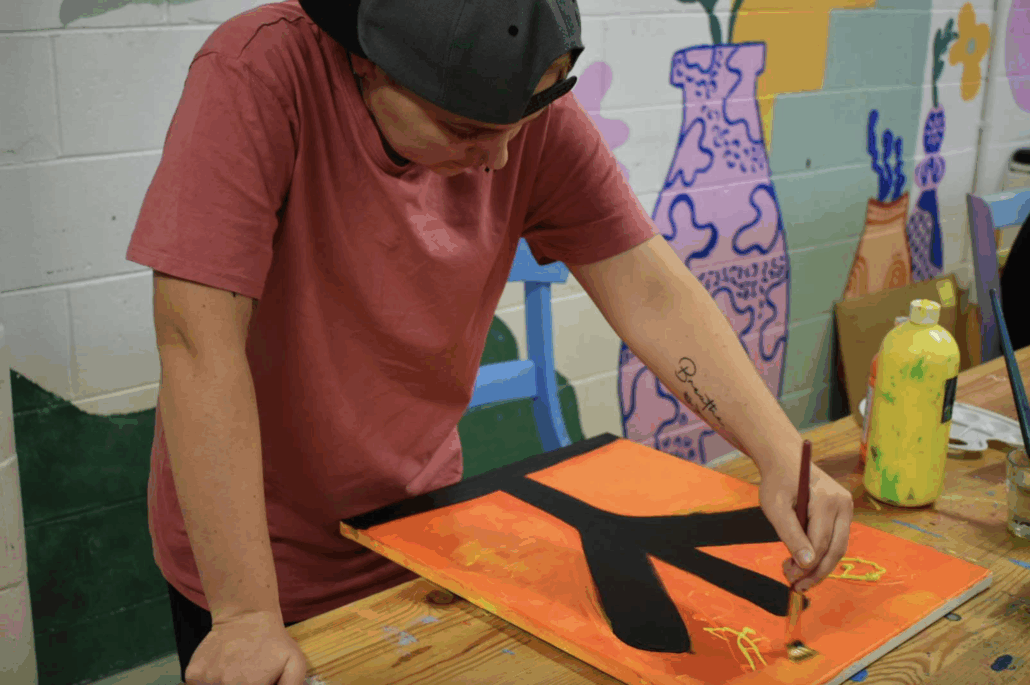
Creativity is something we are all born with. Whether it’s painting, singing, building, acting or making music, creative expression gives us a way to explore the world, communicate our thoughts and discover more about ourselves.
For people with disability, creativity can be even more powerful. It provides opportunities to build confidence, develop new skills, express emotions and connect with others in meaningful ways.
At Blue Tongue Adventure, we see this every day. A participant who hesitated to pick up a paintbrush proudly shares their finished artwork. Someone who rarely speaks finds their voice through music. A group of strangers work together to create a theatre performance and leave as friends.
Creative expression is about much more than making art. It is about building confidence, identity and a sense of belonging.
Why creativity is important for everyone
Creativity is often associated with artists, musicians or performers. In reality, everyone benefits from using the creative side of their brain.
Creative activities encourage us to think differently, solve problems, explore new ideas and approach challenges with curiosity. They also give our minds a break from everyday routines and create opportunities to be fully present in the moment.
Research shows that creative activities can:
- Improve concentration and focus
- Reduce stress and anxiety
- Boost mood and wellbeing
- Encourage problem-solving skills
- Strengthen memory and learning
- Increase confidence through achievement
Unlike many everyday tasks, creativity doesn’t have a “right” or “wrong” answer. Instead, it celebrates individuality and personal expression.
That freedom can be incredibly empowering.
Creative expression builds confidence
Confidence doesn’t usually appear overnight. It grows through trying something new, overcoming challenges and recognising your own achievements.
Creative activities provide countless opportunities for these small wins.
Learning how to shape clay, paint with watercolours or perform in front of an audience may feel challenging at first. However, every completed project reminds participants that they are capable of learning, growing and succeeding.
Over time, that confidence often extends beyond the art room.
Someone who becomes more confident sharing their artwork may also feel more comfortable speaking in a group, trying a new activity or meeting new people.
These experiences help build resilience alongside confidence.
Art helps people communicate in different ways
Communication looks different for everyone.
While some people communicate through conversation, others express themselves more comfortably through movement, music, painting, photography or performance.
Creative expression gives people another way to tell their story.
For participants who experience communication barriers, visual art, music and theatre can become powerful tools for expressing emotions, sharing ideas and connecting with others.
Sometimes a painting says what words cannot.
Sometimes a song captures a feeling that has been difficult to explain.
This kind of self-expression helps people feel seen, understood and valued.
Creativity supports emotional wellbeing
Life can sometimes feel overwhelming. Everyone experiences stress, frustration or difficult emotions from time to time.
Creative activities provide a healthy outlet for processing these feelings.
Many people describe painting, sculpting or listening to music as calming because these activities encourage mindfulness. Instead of worrying about yesterday or tomorrow, attention naturally shifts to the creative process happening right now.
Research also suggests that creative activities can stimulate the release of dopamine, a chemical associated with motivation, enjoyment and reward. That is one reason why people often leave creative sessions feeling happier, calmer and more energised.
Importantly, creativity doesn’t just stimulate the brain. It can also quiet it.
For many participants, creative sessions become a chance to slow down, regulate emotions and enjoy a sense of calm in a supportive environment.
Creativity stimulates the brain
Creative activities engage multiple areas of the brain at the same time.
Painting involves planning, coordination, colour recognition and fine motor skills.
Music combines rhythm, memory, listening and movement.
Theatre encourages communication, imagination, teamwork and emotional awareness.
Working across these different skills keeps the brain active while encouraging lifelong learning.
Creative experiences also strengthen problem-solving skills.
There is rarely only one way to complete an artwork or perform a scene. Participants learn to experiment, adapt and think creatively when something doesn’t go as planned.
These experiences build flexibility, persistence and confidence that can carry into everyday life.
Creativity encourages social connection
Some of the most meaningful moments happen while creating alongside others.
Working together on a group mural, performing in a theatre production or making music as a band encourages teamwork, conversation, and shared achievement.
Creative activities naturally bring people together.
Participants celebrate each other’s successes, offer encouragement, and learn from one another along the way.
For many people, these shared experiences help build genuine friendships while reducing feelings of loneliness or isolation.
Being part of a creative community reminds people that they belong.
Creativity celebrates individuality
No two people create in exactly the same way.
One person may enjoy bold colours and abstract painting. Another may prefer detailed woodwork or digital illustration.
Creativity encourages people to explore what they enjoy rather than trying to fit into someone else’s idea of success.
That is especially important for people with disability.
Creative expression shifts the focus away from limitations and towards strengths, interests and possibilities.
It allows participants to explore their identity, celebrate their uniqueness and take pride in what they create.
At Blue Tongue Adventure, we believe every masterpiece looks different because every person does too.
Creativity comes to life at Blue Tongue Adventure
Creativity is woven throughout life at Blue Tongue Adventure.
Our Art & Soul and Woodworks programs gives participants the opportunity to explore an incredible range of artistic mediums while discovering new interests and developing practical skills.
Across the year, our crew experiment with:
- Ceramics
- Woodwork
- Digital art
- Watercolours
- Clay
- Paper mâché
- Painting
- Mixed media
- Seasonal creative projects
- And so much more.
Every session encourages participants to express themselves, try something new and enjoy the creative journey, regardless of their experience or ability.
Creativity doesn’t stop in the studio either.
We regularly head out into the community to experience creativity in all its forms. From visiting galleries and immersive art experiences to attending theatre performances and creative exhibitions, participants have opportunities to explore Australia’s vibrant arts and culture scene while building confidence in community settings.
Our Theatre Program helps participants develop communication skills, confidence and teamwork through acting, storytelling and performance.
Meanwhile, our Music Program introduces participants to instruments, rhythm, and collaborative music-making. Whether learning guitar basics, experimenting with percussion or creating original group performances, music provides another exciting way to build confidence while having fun.
Each program creates opportunities to learn, connect and celebrate individual strengths.
Discover your creative confidence with Blue Tongue Adventure
At Blue Tongue Adventure, we believe creativity has the power to build confidence, strengthen communication and help people discover new passions.
Our wide range of disability day programs are designed to help participants explore their interests, develop practical skills and build meaningful friendships in a supportive, welcoming environment. Whether you’re painting your first canvas, performing on stage, learning an instrument or visiting an inspiring gallery, every experience is an opportunity to grow.
If you’d like to learn more about our programs or join the Blue Tongue Adventure crew, we’d love to hear from you.
📞 Phone: 1800 949 249
📧 Email: hello@bluetongueadventure.com.au
FAQs
Why are creative activities important for people with disability?
Creative activities help build confidence, encourage communication, support emotional wellbeing and provide opportunities for social connection. They also allow people to express themselves in ways that go beyond words.
Can art improve confidence?
Yes. Completing creative projects, learning new skills and sharing achievements with others helps people develop confidence over time. These small successes often carry into other areas of life.
What types of creative programs does Blue Tongue Adventure offer?
Blue Tongue Adventure offers a variety of creative programs, including Art & Soul, theatre, and music programs. Participants also enjoy community outings to galleries, theatre performances, and other creative experiences.
Do I need to be artistic to join Blue Tongue Adventure?
Not at all. Our programs are designed for people of all experience levels. The focus is on having fun, trying new things and building confidence, not creating perfect artwork.
How does creativity support mental wellbeing?
Creative activities can reduce stress, improve focus, support emotional regulation and create a sense of achievement. Many people also find art and music calming because they encourage mindfulness and being present in the moment.
Can creative activities help with communication?
Absolutely. Art, music and theatre provide alternative ways for people to communicate thoughts, emotions and ideas, particularly for those who find verbal communication challenging.
What other disability day programs does Blue Tongue Adventure offer?
Alongside our creative programs, Blue Tongue Adventure offers a diverse range of community-based disability day programs that encourage adventure, independence, skill development, social connection and personal growth. Whether participants enjoy being creative, active or exploring the community, there’s something for everyone.


