“I can’t do that.”

Sometimes, those four words really mean, “I’ve never done that before.”

They might mean, “I’m nervous.”

Or perhaps they mean, “I’m not sure I can do it without some help.”

For young adults living with disability, trying something new can feel exciting, uncomfortable, challenging and rewarding all at once.

It could be cooking a meal for the first time. Joining a theatre performance. Learning how to use a tool safely. Ordering lunch independently. Trying a new sport. Catching public transport. Or simply walking into a room filled with new people.

At Blue Tongue Adventure, we see these moments all the time.

And quite often, “I can’t” eventually becomes “I did.”

That shift might seem small from the outside. However, it can represent something much bigger.

It can mean growing confidence, greater independence and discovering a new sense of what’s possible.

Confidence grows through experience

Confidence isn’t something we simply wake up with one morning.

It grows through experience.

Every time we try something unfamiliar, we gather information about ourselves.

We discover what we’re good at. We learn where we need more practice. We realise that making a mistake isn’t the end of the world.

Most importantly, we learn that we can try again.

For a young person who has spent years hearing what they may struggle with, opportunities to experience success can be incredibly valuable.

That success doesn’t need to be huge.

Perhaps someone prepares their first meal without as much assistance as usual.

Maybe they speak in front of a group when they usually stay quiet.

They might complete a woodwork project, perform on stage or participate in a community outing they once found intimidating.

Every achievement becomes another piece of evidence.

“I’ve done something difficult before.”

“Maybe I could do this too.”

That’s how confidence starts to build.

Why a supportive environment matters

Trying something new feels very different when you know someone is there to support you.

There’s a big difference between being pushed into an uncomfortable situation and being encouraged to challenge yourself at your own pace.

At Blue Tongue Adventure, our programs provide structured support while still encouraging choice and independence.

That balance matters.

We want our Crew to know that support is there when they need it.

However, we also want them to have opportunities to make decisions, solve problems and discover what they’re capable of doing themselves.

Sometimes a support worker might demonstrate something first.

Then they may complete it alongside the participant.

Eventually, they might take a small step back and allow the participant to take the lead.

That gradual process can transform something unfamiliar into something achievable.

Trying new things can help you discover what you love

You can’t know whether you enjoy something until you’ve had the chance to try it.

It sounds simple, but it’s an important part of growing up.

Young adulthood is a time for discovering interests, preferences and strengths.

You might learn that painting isn’t your thing, but digital art absolutely is.

Perhaps you never considered theatre until you stepped onto a stage.

Maybe cooking becomes something you genuinely look forward to.

Or you might discover that working with tools, playing sport or making music gives you a sense of achievement.

At Blue Tongue Adventure, our programs include opportunities across:

  • Art and digital art
  • Theatre
  • Dance
  • Music
  • Cooking
  • Woodwork
  • Sports
  • Mechanical activities
  • Community access
  • Social activities

Every program offers something different.

Therefore, participants have opportunities to explore their interests rather than being placed into the same routine every week.

You don’t need to be good at something before you start.

Sometimes the whole point is finding out whether you’d like to do it again.

New experiences build independence

Independence isn’t only about being able to live alone.

It can appear in hundreds of smaller decisions and everyday skills.

  • Choosing what you want to do.
  • Asking someone for help.
  • Paying for your own coffee.
  • Preparing food.
  • Following directions.
  • Managing your belongings.
  • Communicating what you like or don’t like.
  • Travelling somewhere new.
  • Working through a problem instead of immediately giving up.

These skills often develop naturally while we’re doing something else.

For example, a cooking program might look like a fun day making lunch.

But participants may also practice reading instructions, measuring ingredients and working safely.

Additionally, they might make decisions, communicate with others and clean up afterwards.

A community outing might involve much more than simply visiting somewhere fun.

Participants may practice navigating a new environment, handling money or ordering something independently.

That’s one of the things we love most about learning through adventure – the skill-building happens in real life.

Getting things wrong is part of getting things right

Nobody gets everything right the first time.

Yet sometimes, young people living with disability can have fewer opportunities to make mistakes independently.

Family members, teachers or support workers naturally want to help.

However, stepping in too quickly can sometimes remove an important part of learning.

Making a mistake.

At Blue Tongue Adventure, we believe safe mistakes can be valuable.

Maybe the recipe doesn’t look exactly like the photo. Perhaps a piece of artwork doesn’t turn out how you imagined. You might forget what you’re meant to say in a theatre exercise.

That’s okay.

Instead of focusing only on the outcome, we can ask:

What happened? What could we try differently? Do you want to have another go?

Learning that mistakes are manageable helps build resilience.

Eventually, a setback becomes less likely to feel like proof that “I can’t do it.” It becomes part of figuring out how.

Confidence can spill into other parts of life

Something interesting happens when you become confident in one area. Sometimes that confidence starts appearing elsewhere.

Someone who becomes comfortable speaking during a theatre program may feel more confident talking to new people.

A participant who learns to cook may begin helping more at home.

Someone who successfully navigates a community outing may feel more comfortable visiting somewhere unfamiliar later.

Joining a sports program might encourage someone to communicate more with teammates.

The original activity may not even be the most important outcome.

It’s what the participant learns about themselves while doing it.

“I can learn.”

“I can contribute.”

“I can ask for help.”

“I can try again.”

“I can do more than I thought.”

Those beliefs can influence everyday life.

Trying new things builds social confidence too

Walking into a new social environment can feel intimidating for anyone.

For some young adults living with disability, meeting unfamiliar people or joining group activities can feel especially challenging.

Regular group programs create opportunities to practice those interactions in a supportive environment.

You don’t need to become the loudest person in the room. You might start by sitting beside someone new. Then you might join a group activity. Later, perhaps you start the conversation yourself. Over time, familiar faces become people you know. And sometimes, those people become genuine friends.

Shared experiences make that process easier.

It’s often simpler to connect when everyone is already focused on the same activity. You can talk while cooking, laugh during sport or work together on a creative project. Friendship can develop naturally along the way.

There is no single definition of progress

Progress looks different for every person.

For one participant, performing on stage might be a huge achievement. For someone else, simply attending theatre rehearsal could be the win.One person may want to learn to travel independently. Another may be working towards confidently ordering their own lunch.

Goals don’t need to look impressive to anyone else. They need to matter to the person working towards them.

That’s why we believe individualised support is so important.

At Blue Tongue Adventure, we don’t expect every participant to enjoy the same activities or progress at the same speed. Some people jump straight in. Others prefer to watch first. Both are okay.

Support should meet people where they are while creating opportunities to move forward when they’re ready.

Fun and learning don’t need to be separate

Sometimes we think skill-building needs to feel serious. At Blue Tongue Adventure, we disagree.

A lot of learning happens when you’re busy enjoying yourself.

  • You might practise communication while joking with friends.
  • You can develop teamwork while playing sport.
  • You might build concentration while creating art.
  • Problem-solving can happen while you’re working on a mechanical project.
  • And independence can grow during a trip into the community.

The activity creates the reason to practice the skill. That can make learning feel far more natural.

Our mission has always been to combine learning, adventure and friendship.

Because when people enjoy coming to a program, they’re more likely to participate, and participation creates opportunities to grow.

Celebrate the small wins

It’s easy to focus on the big milestones: getting a job; travelling independently; moving towards independent living; completing a qualification.

Those achievements deserve celebrating.

However, the small wins matter too.

  • Starting a conversation.
  • Trying a food you’ve never eaten.
  • Speaking up about what you want.
  • Finishing something you nearly gave up on.
  • Joining the group instead of watching from the side.

Those moments add up.

Eventually, something that once seemed impossible can become part of everyday life.

That’s why we love hearing the words:

“I did it.”

Discover what’s possible at Blue Tongue Adventure

At Blue Tongue Adventure, we’re all about learning, adventuring and friendship.

Our programs are designed for young adults aged 17–30 with low to moderate support needs.

We keep things personal, with support ratios no higher than 1:3.

Most importantly, we want every member of our Crew to have opportunities to explore what interests them.

Maybe you’ve always wanted to try theatre. Perhaps you’d love to cook, create art, learn mechanical skills or get involved in sport. Maybe you’re simply looking for somewhere to meet new people and become more confident.

You don’t need to arrive knowing exactly what you want to achieve.

Sometimes you discover the goal along the way.

We’ll be there to support you, encourage you and celebrate the wins with you. Big ones. Small ones. And especially the ones that begin with:

“I don’t think I can.”

Because you might just surprise yourself.

FAQs

Disability day programs can provide supported opportunities to try new activities, practice skills and make decisions. Positive experiences can help participants become more confident in their abilities over time.

Depending on the program, participants can practice communication, teamwork, cooking, decision-making, community access and problem-solving. Programs can also support social skills, creativity and greater everyday independence.

That’s okay. You don’t need to feel confident before you begin. Our team can support you at your own pace, whether you want to observe first or get involved straight away.

Absolutely not. Blue Tongue Adventure is about exploring interests, learning and having fun. You don’t need previous experience in art, theatre, cooking, sport or any of our other programs.

Depending on your individual plan and goals, activities may help you work towards areas such as independence, social participation, communication and skill development. Your supports should always relate to your individual NDIS needs and funding.

Blue Tongue Adventure programs are designed for young adults aged 17–30 with low to moderate support needs.

Programs can include art, digital art, theatre, dance, music, woodwork, cooking, sport, mechanical activities, community access and social experiences. Program availability can vary, so speak with the team about the current calendar.
Finishing school and stepping into adulthood can bring plenty of exciting possibilities.

It can also bring some big questions.

What do I want to do for work? How can I become more independent? How do I make new friends? What if I’m not ready for employment yet?

For young people living with disability, having the right support can make exploring those questions feel much more achievable.

At Blue Tongue Adventure, our programs focus on much more than filling a day with activities.

We create opportunities for young people to learn, connect, explore their interests and work towards their individual NDIS goals.

For school leavers, Blue Tongue Pathways also provides School Leaver Employment Supports (SLES). These supports help young people build confidence and develop skills for their future.

Together, these programs can create a pathway from learning and exploration towards greater independence, community participation and employment.

Turning NDIS goals into real-life experiences

An NDIS goal can look simple when it’s written in a plan.

You might want to become more independent, improve your social skills or participate more in your community.

However, achieving those goals usually takes practice.

That’s where practical experiences become important.

NDIS capacity building supports can help participants increase independence and become more involved in their communities. The NDIS specifically recognises activities that build social skills, friendships, community connections and independence.

At Blue Tongue Adventure, we work on these skills through activities young people can actually enjoy.

Our Crew might be cooking, playing sport, creating digital art, learning woodwork, dancing, making music or heading out into the community.

The activity itself is only part of the experience.

Along the way, participants can practise communication, teamwork, problem-solving, decision-making and independence.

Most importantly, they’re learning through doing.

Building confidence and independence

Independence doesn’t happen overnight.

Often, it develops through lots of small experiences.

Ordering something at a café. Paying for an item at the shops. Making a decision within a group. Following instructions for a recipe. Catching public transport. Speaking to someone new.

Each experience creates another opportunity to practise.

The NDIS recognises community participation supports as one way participants can build skills that may eventually support employment. These can include using public transport, managing money, meeting people and learning to work within a team.

At Blue Tongue Adventure, our goal is to create a supportive environment where young people feel comfortable giving things a go.

Sometimes that means succeeding straight away.

Other times, it means trying something, making a mistake, having another go and discovering that you’re capable of more than you thought.

That’s where confidence starts to grow.

Making friends and feeling part of a community

For many young adults, one of the biggest parts of life after school is finding a new social circle.

School naturally creates opportunities to see the same people every day. Once school finishes, those opportunities can suddenly disappear.

Unfortunately, people living with disability can face greater barriers to social and community participation.

The Australian Institute of Health and Welfare (AIWH) reports that 19% of people with disability aged 15–64 experience social isolation. That compares with 9.5% of people without disability.

Newer AIHW reporting also shows that 29% of people with disability aged 15–64 reported often feeling lonely.

That makes meaningful opportunities to connect especially important.

Blue Tongue Adventure brings young people together through shared interests and experiences.

Our programs create space to have conversations, share a laugh and try something new together.

Over time, those repeated interactions can help participants improve communication skills and build genuine friendships.

For us, social participation shouldn’t feel forced.

It should feel like being part of the Crew.

Learning everyday life skills without sitting in a classroom

Not every important skill needs to be learnt from a workbook.

Some things make far more sense when you experience them in real life.

That’s why our programs incorporate practical skills into everyday activities.

Cooking can involve planning, following instructions, food safety and teamwork.

A community outing might involve planning transport, managing money or communicating with staff at a venue.

Woodwork can involve concentration, safety awareness and following a process.

Meanwhile, theatre, dance and music can encourage creativity, confidence and communication.

Different activities create different learning opportunities.

Therefore, participants can explore what works for them while developing skills they can use outside the program too.

Preparing for the next step after school

Many young people leave school without knowing exactly what they want to do with the rest of their life.

And they shouldn’t have to.

Some young people are ready to start looking for a job straight away. Others need more time to develop confidence and workplace skills.

Some simply need the opportunity to discover what kind of work they might actually enjoy.

That’s where School Leaver Employment Supports (SLES) can help.

SLES-style employment supports are designed to help school leavers build the skills needed to move towards employment.

Current NDIS guidance recognises intensive employment support for school leavers transitioning into work. It can also support pathways towards further education, training, traineeships and apprenticeships.

At Blue Tongue Pathways, we start with the individual.

What are you good at?

What interests you?

What would you like to become more confident doing?

And, eventually, what type of work might you enjoy?

From there, we can start building a pathway.

What can you learn through SLES?

Employment involves much more than knowing how to perform one particular job.

You need to communicate with other people. You need to understand expectations. You may need to travel independently and manage your time.

You also need confidence.

That’s why our SLES program starts with foundation skills.

Depending on your individual goals, this may include:

  • Communication and interpersonal skills
  • Personal presentation and hygiene
  • Money management
  • Numeracy and literacy
  • Independent travel
  • Time management
  • Workplace behaviour and expectations
  • Understanding workplace rights
  • Teamwork
  • Building a positive work ethic
  • Problem-solving and decision-making

From there, participants can explore vocation-specific skills related to industries that interest them.

The NDIS requires employment providers to develop tailored supports around each participant’s employment goals, barriers and individual support needs.

That’s also how we approach SLES at Blue Tongue Pathways.

There isn’t one pathway everyone needs to follow.

What if I don’t know what job I want?

That’s completely okay.

One of the valuable parts of SLES is getting the opportunity to explore.

You might think you want to work in hospitality before discovering that you love something creative.

You might enjoy working with animals, working outdoors or helping other people.

Alternatively, you may discover that further study or training is the right next step for you.

You don’t need to have your whole career mapped out before you begin.

Supported work experiences can give young people an opportunity to understand what different workplaces actually feel like.

Once you’ve identified an area you’re interested in, Blue Tongue Pathways can help explore suitable work experience opportunities.

When you feel ready, support can then move towards job applications, resumés, interview preparation and employment.

What does a day at SLES look like?

At Blue Tongue Pathways, a typical SLES day runs from 9 am to 3 pm.

Most participants attend once or twice each week.

Mornings generally include small-group workshops focused on employment, independence and life skills.

Group discussions also give participants opportunities to practice communication and learn from each other.

Then, afternoons become more hands-on.

You might take part in a course, attend work experience, practice travelling independently or complete a mock job interview.

Support can be provided individually or in small ratios, depending on the activity and participant needs.

The aim is to gradually turn skills discussed in a workshop into skills you can confidently use in everyday life.

More than getting a job

Employment can certainly be an important goal.

However, becoming work-ready often creates benefits well beyond employment.

Learning to travel can increase community independence.

Improving communication can help with friendships.

Money-management skills can help with everyday purchases.

Learning to speak confidently in an interview can make it easier to advocate for yourself elsewhere.

Meanwhile, discovering your strengths can change the way you see your own future.

That’s why employment preparation and everyday capacity building often complement each other so well.

A job might be one destination.

The bigger goal is helping young people build confidence, choice, and independence along the way.

Why choose Blue Tongue Adventure and Blue Tongue Pathways?

At Blue Tongue, we believe learning works best when people actually enjoy being there.

Blue Tongue Adventure programs are designed for young people aged 17–30 with low to moderate support needs.

Our activities include theatre, dance, music, woodwork, art, digital art, cooking, community access, sports and more.

However, our programs aren’t about ticking activities off a calendar.

They’re about the “Crew” themselves.

We keep our support personal, with ratios no higher than 1:3 across our Blue Tongue Adventure programs. This allows our team to build genuine relationships and provide meaningful support.

For young people preparing for employment, Blue Tongue Pathways takes that same personalised approach into SLES.

We’ll work with you to explore your interests, build your independence and develop the skills you need for your next step.

Maybe that’s work. Maybe it’s study. Maybe it’s gaining the confidence to travel somewhere independently for the first time.

Whatever the goal, we’re here to help you work towards it.

Because adulthood isn’t about following one predetermined pathway. It’s about discovering yours.

Get in touch with Blue Tongue Adventure or Blue Tongue Pathways to learn more about our programs, SLES and how we can support your NDIS goals.

FAQs

NDIS day programs provide structured opportunities to build skills, social connections and community participation. Activities can include recreation, creative programs, cooking, sport and community outings. The specific supports available will depend on your NDIS plan, goals and funding.

Blue Tongue Adventure uses practical activities and community experiences to work towards individual goals. These might include improving communication, increasing independence, developing friendships, learning everyday skills or becoming more confident in the community.

School Leaver Employment Supports, commonly known as SLES, help eligible young people transition from school towards employment. Supports can focus on work readiness, independence, communication, travel, workplace skills, work experience and exploring different career pathways.

No. Exploring your interests can be an important part of School Leaver Employment Support (SLES). Blue Tongue Pathways can help you identify your strengths, learn about different industries and experience potential workplaces before deciding which direction you would like to pursue.

SLES can support work skills such as communication, teamwork, money management, independent travel, personal presentation, workplace behaviour and job preparation. Your program should reflect your individual employment goals and support needs.

NDIS programs can create opportunities to meet people and develop social skills. Blue Tongue Adventure participants take part in small-group activities, outings and shared experiences where friendships can develop naturally over time.

Blue Tongue Adventure programs are designed for young people aged 17–30 with low to moderate support needs. Whether a particular program can be funded through your NDIS plan will depend on your individual goals, supports and available funding.

Cooking is about so much more than preparing a meal. Knowing how to cook nutritious meals, follow safe food practices, and make choices about what we eat is an important part of living a full and independent life.  

At Blue Tongue Adventure, our weekly cooking program gives participants the opportunity to build valuable life skills in a fun, supportive, and hands-on environment at Blue Tongue Kitchen. 

Every Monday, our BTA crew step into our professional bayside kitchen, learn new recipes, work together, and develop skills that support greater independence both inside and outside the kitchen. 

A cooking program designed to build confidence and independence 

Our NDIS cooking classes are designed to help participants develop practical skills that they can use every day. 

Through our cooking program, participants learn how to: 

  • Follow recipes and cooking instructions 
  • Prepare healthy and nutritious meals 
  • Understand food choices and nutrition 
  • Practice kitchen hygiene and food safety 
  • Safely use kitchen equipment 
  • Build confidence trying new skills 
  • Work as part of a team 
  • Develop greater independence at home 

Cooking can sometimes feel overwhelming, especially when someone has never had the opportunity to learn in a supportive environment. 

Our program creates a space where participants can learn at their own pace, celebrate their achievements, and gain confidence with every new recipe. 

A unique learning experience at Blue Tongue Kitchen 

One of the things that makes our cooking program so special is the environment where it takes place. 

Participants don’t cook in a traditional classroom setting. They get to experience Blue Tongue Kitchen, our modern bayside commercial kitchen equipped with professional cooking equipment and everything needed to create amazing meals. 

The change of environment helps participants feel like they are part of something exciting and meaningful. It creates a real cooking experience where they can learn, explore, and enjoy being in a professional kitchen. 

Blue Tongue Kitchen provides a unique opportunity for our BTA crew to develop skills in a space that feels authentic, welcoming, and inspiring. 

10-week cooking programs with a new theme every block 

Our cooking programs run in 10-week blocks, with each block exploring a different theme. 

This gives participants the opportunity to continuously learn new skills, discover new cuisines, and keep building their confidence in the kitchen. 

Our current 10-week block has an Around the World theme, where participants explore the food and culture of different countries through cooking. 

So far, the group has travelled through: 

🌏 Australia – creating a classic Aussie Meat Pie from scratch, complete with a rich savoury filling and golden flaky pastry. 

🇮🇹 Italy – learning how to make Homemade Pasta Primavera, including fresh pasta and a colourful, flavour-packed primavera sauce. 

🇲🇽 Mexico – building a delicious Nachos Bake, layered with seasoned beef, crunchy corn chips and melted cheese. 

There’s still plenty more to come, with participants set to explore: 

🇻🇳 Vietnam – Rice Paper Rolls 

🇺🇸 United States – Mini Cheeseburgers 

🇹🇭 Thailand – Thai Fried Rice 

🇮🇳 India – Butter Chicken with Rice 

🇧🇷 Brazil – Pão de Queijo (Brazilian Cheese Bread) 

🇪🇸 Spain – Spanish Frittata 

🇯🇵 Japan – Sushi 

…with every session introducing new flavours, cooking techniques and cultural experiences from around the world. 

Each week brings a new opportunity to learn, taste, create, and share experiences together. 

Meet Chef Claudio: Bringing passion and experience to every class 

Leading the cooking program is our amazing Chef and Program Coordinator, Claudio, who brings nearly 10 years of culinary experience to Blue Tongue Kitchen. 

Claudio began his culinary career in Brazil before continuing his journey through a wide range of kitchens across Australia, including resorts and remote hospitality environments. 

His cooking style is inspired by his Brazilian heritage and Mediterranean influences, focusing on simple, honest flavours that bring people together. 

However, what makes Claudio such a valued part of the program is not just his culinary expertise. It is his ability to create a calm, welcoming environment where participants feel comfortable learning, experimenting, and building confidence. 

Claudio believes cooking is about much more than recipes. It is about connection, skill development, and creating experiences that help people feel capable and proud of what they can achieve. 

From handmade pasta and focaccia to seasonal comfort dishes, Claudio’s cooking celebrates flavour, creativity, and the joy of sharing food together. 

Supporting NDIS participants to develop real-life skills 

Cooking is a key life skill that supports independence. 

While it can be easy to overlook, knowing how to prepare meals, understand nutrition, and safely use kitchen appliances plays an important role in helping people live more independently. 

At Blue Tongue Adventure, our goal is to support our crew to live their lives to the fullest. 

That means creating opportunities where participants can: 

  • Learn new skills 
  • Build confidence 
  • Try new experiences 
  • Make choices for themselves 
  • Become more independent 

Our cooking program is a fun and practical way to develop these skills while being surrounded by a supportive community. 

How can participants use their NDIS funding for cooking classes? 

Blue Tongue Adventure cooking programs may be accessed using NDIS funding under several categories, depending on a participant’s individual plan and goals. 

Funding options may include: 

CAPACITY BUILDING
Skills Development And Training 09_009_0117_6_3

COMMUNITY ACCESS
Innovative Community Participation 09_008_0116_6_3
Centre Capital Cost 04_599_0136_6_1

CORE
Group Activities – Standard – Weekday Daytime 04_102_0136_6_1
Centre Capital Cost 04_599_0136_6_1

Funding eligibility depends on each participant’s individual NDIS plan, goals, and available funding. 

If you are unsure whether the program is suitable for you, our team can help answer your questions. 

Want to join the Blue Tongue Adventure cooking program? 

If you’re part of the Blue Tongue Adventure crew and would like to take part in our cooking program, we’d love to have you join us! 

If you’re not currently part of Blue Tongue Adventure but would like to become a participant and explore our programs, we’d love to hear from you too. 

Speak with your Blue Tongue Adventure Coordinator or contact our team: 

📧 hello@bluetongueadventure.com.au
📞 1800 949 249 

If you’re interested in joining NDIS cooking classes at Blue Tongue Kitchen but aren’t currently part of the Blue Tongue Adventure crew, you can submit an enquiry through Blue Tongue Kitchen to register your interest. Our team will be happy to discuss your options and help you understand how you can get involved. 

Our coordinators are here to answer your questions and support you through every step of the process. 

FAQs

The program is available for members of the Blue Tongue Adventure community who want to build cooking skills, confidence, and independence. 

Not at all! Our program is designed for all skill levels. Whether you are new to cooking or already enjoy spending time in the kitchen, everyone can learn something new. 

Participants learn practical skills including meal preparation, nutrition, food hygiene, kitchen safety, teamwork, and following recipes,  designed to provide a fun and engaging cooking experience. 

Cooking classes are held at Blue Tongue Kitchen, our modern bayside kitchen in Thorneside. 

Each cooking program runs for 10 weeks, with every block featuring a new theme and new recipes to explore. 

Many participants access the program using their NDIS funding. Funding depends on individual plans, goals, and available supports. 

Speak with your Blue Tongue Adventure Coordinator or email hello@bluetongueadventure.com.au, and our team will help you get started. 


Every year, the NDIA updates its Pricing Schedule, and every year, we take the time to understand the changes so we can share the important facts with you. Our role is to break it down into clear, practical information to provide clarity on what it means for you. 

The 2026–27 NDIS Pricing Schedule is now in effect, bringing several important changes for participants accessing disability day programs and School Leaver Employment Supports (SLES). We’ve broken down the key updates, what they mean for you, and how the Blue Tongue Adventure team is here to support you every step of the way. 

A quick note about the terminology 

You might hear two different terms used throughout this article: Core Supports and Social, Community and Civic Participation (SCCP). 

For most participants, Blue Tongue Adventure day programs are funded through your Core Supports budget, under Assistance with Social and Community Participation. In the NDIA’s Annual Pricing Review (APR), these same supports are grouped under the technical pricing category Social, Community and Civic Participation (SCCP).

Throughout this blog, we’ll mostly refer to Core Supports, while using SCCP when we’re explaining the specific pricing changes introduced by the NDIA. 

First Up: What Funding Covers Day Programs and SLES in the NDIS? 

Most of what we do at Blue Tongue Adventure sits under two NDIS support categories: 

Social, Community and Civic Participation (SCCP) covers disability day programs, group activities, community access and centre-based supports – adventure days, art, cooking, ceramics, woodwork, urban outings and everything in between. 

Capacity Building – Employment covers School Leaver Employment Supports (SLES) – the funding that helps school leavers build the independence skills, job skills and work experience they need to take their next big steps. 

Both categories have updates for 2026–27. Here’s what you need to know. 

What’s Changed for Day Programs (SCCP)? 

Support Worker Rates Have Increased 

The hourly rates for SCCP supports have increased from 1 July 2026, reflecting the Fair Work Commission’s Annual Wage Review and updates to the SCHADS Award. Support workers deserve fair pay, and this year’s review has delivered that. It does mean, though, that if your plan was calculated on 2025–26 rates, your funding may not stretch quite as far. 

The new maximum hourly rates for community access and group activities (national rates) are: 

Standard Supports: 

Time  Rate 
Weekday Daytime  $73.58/hr 
Weekday Evening  $81.07/hr 
Saturday  $103.54/hr 
Sunday  $133.50/hr 
Public Holiday  $163.46/hr  

High Intensity Supports: 

Time  High Intensity Rate 
Weekday Daytime  $79.60/hr
Weekday Evening $87.70/hr
Weekday Night $89.32/hr
Saturday $112.01/hr
Sunday $144.42/hr
Public Holiday $176.84/hr

Group Programs Are Great Value 

One thing worth understanding is how shared support pricing works in your favour. In shared support arrangements, such as 1:2 or 1:3 support ratios, the hourly NDIS rate remains the same, but the cost of the support worker is shared across participants according to the level of support being delivered. This means your individual cost is lower than receiving the same number of hours of one-to-one support. Our programs are designed to maximise this approach, allowing participants to enjoy engaging, social days of adventure and skill building while making their NDIS funding go further than it would with individual support alone. 

The Bigger Shift: Different Pricing for Registered and Unregistered Providers from January 2027 

One of the most significant changes announced in the 2026–27 NDIS Annual Pricing Review comes into effect from 1 January 2027. 

Currently, registered and unregistered providers delivering Supports in a Community Setting (SCCP) can charge the same maximum NDIS price. 

The NDIA has announced that: 

  • Registered providers (like Blue Tongue Adventure) will continue to charge the current maximum price limits, with annual indexation to reflect rising wages and operating costs. 
  • Unregistered providers will have their maximum price limits reduced by 10%, and these prices will no longer receive annual indexation. 

Why is the NDIA making this change? 

The NDIA recognised that registered providers operate under a very different cost structure to unregistered providers. 

As a registered NDIS provider, Blue Tongue Adventure meets strict quality and safeguarding requirements, including regular NDIS Commission audits, worker screening, staff training, governance, quality assurance systems, award wages, and ongoing compliance obligations. These measures are in place to help ensure participants receive safe, high-quality supports from skilled and accountable providers. 

Many unregistered providers operate as sole traders or very small businesses with fewer regulatory requirements and lower overheads. The NDIA determined that the previous pricing model did not adequately reflect these differences, and the new pricing aims to create a fairer and more sustainable system across the sector. 

What does this mean for Blue Tongue Adventure participants? 

The good news is that very little changes if you’re already attending Blue Tongue Adventure.

As a registered provider, our pricing remains aligned with the NDIA’s published price limits and will continue to receive annual indexation. These changes help ensure providers like Blue Tongue Adventure can continue investing in experienced support workers, engaging community programs, participant safety, and high-quality services for years to come. 

The changes also create a more level playing field between registered and unregistered providers by recognising the additional standards and protections that registered providers deliver. This means families can have greater confidence that registered providers are being appropriately funded to maintain the quality, consistency and safeguards participants rely on. 

What About SLES? Here’s the Good News 

SLES is funded under Capacity Building – Employment, and the Annual Pricing Review data tells a genuinely encouraging story about this category. 

Capacity Building – Employment was one of the fastest-growing support categories in the NDIS in the six months to December 2025, with payments increasing by 36.2% compared to the same period the previous year. That growth reflects more young people accessing employment pathway supports, exactly the kind of meaningful investment in futures that SLES is designed to enable. 

SLES funding is annualised (rather than a set hourly rate), which means it offers flexibility in how it’s used across a program year. This suits the way Blue Tongue Pathways works, with workshop mornings, hands-on afternoons, work experience placements, travel training and industry exploration all building toward your goals over up to two years. 

There are no major structural changes to SLES pricing or eligibility in 2026–27, but the strong growth in take-up signals that more school leavers are discovering what SLES can do. If you or a loved one is finishing school soon and hasn’t explored SLES funding yet, this is a great time to ask your NDIS Plan Manager or Support Coordinator about it.  

What These NDIS Pricing Changes Mean for Your Plan 

The most important practical point across all of these changes is this: your NDIS plan funding doesn’t automatically increase when prices go up. If your plan was approved under 2025–26 rates, your budget may not stretch as far under the new rates, and it’s worth checking before you run short. 

Here’s what we’d encourage you to do: 

Talk to your support coordinator. Ask them to model what your supports cost at the new rates and whether your current plan is going to cover you through to your next review. 

Think about how you’re using your Core Supports funding. Group programs like Blue Tongue Adventure offer excellent value because the hourly cost of support is shared. If your plan currently funds a large amount of individual support, it may be worth talking to your Support Coordinator about whether adding small group-based programs could help your Core Supports funding stretch further. 

Ask about a plan review if you need one. If your funding looks like it won’t cover your supports, you can request an unscheduled review. The NDIA has processes for this when costs or circumstances have materially changed. Don’t wait until you run out – act early. 

Why Being a Registered Provider Matters More Than Ever 

The NDIS Pricing Changes 2026–27 are beginning to price registration appropriately, and we think that’s the right direction of travel. 

Being a registered NDIS provider isn’t just a compliance badge. It means our team is qualified and screened, our practices are subject to ongoing review and audit, our participants have access to formal safeguards, and we carry the governance and quality infrastructure needed to deliver programs you can genuinely trust – day in, day out. 

At Blue Tongue Adventure, that’s always been how we’ve operated. Thorough staff induction and training, formal quality systems, and a genuine, consistent commitment to the adventurers who walk through our doors. The new pricing framework is starting to reflect that distinction – and for young people navigating the transition from school to adulthood, the assurance that comes with a registered provider really matters. 

We’re Here to Help You Figure It Out 

We know pricing changes can feel a bit overwhelming, especially when your NDIS plan is tied to something as important as building skills, making friends, and finding your way after school. You shouldn’t have to work through that on your own. 

Whether you’re a current Blue Tongue crew member wanting to understand how these changes affect your program, a family member planning ahead for the year, or a school leaver who is looking to transition – we’d love to have a chat. 

Our programs run across Brisbane’s Bayside and Toowoomba, with flexible options to suit a range of goals and funding types, including Core Supports day programs and Blue Tongue Pathways SLES. 

Visit us at bluetongue-adventure.com.au, or get in touch with our Blue Tongue Adventure coordinators – we’re always happy to help!

For many young adults living with disability, having somewhere to go each week that feels exciting, welcoming and genuinely supportive can make an enormous difference to confidence, independence and overall wellbeing.

A great disability day program is about so much more than simply filling time during the day. The best programs create opportunities for:

  • friendship
  • community connection
  • skill-building
  • creativity
  • independence
  • confidence
  • and fun (of course!)

At Blue Tongue Adventure, we believe young adults deserve disability supports that feel engaging, empowering and age-appropriate –  not clinical, repetitive or one-size-fits-all.

That’s why our disability day programs are designed by young people, for young people.

Why Disability Day Programs Matter

For many people living with disability, the risk of social isolation is very real.

Without meaningful opportunities to connect with others, try new experiences and engage with the community, it’s easy for young people to feel disconnected or left behind.

High-quality disability day programs create safe and inclusive spaces where participants can:

  • build friendships
  • gain independence
  • develop practical life skills
  • discover new interests
  • feel part of something meaningful.

Day programs also provide structure, routine and consistency while helping participants continue working toward their NDIS goals in fun and engaging ways.

Our school transition programs help young people become familiar with our friendly faces, engaging spaces and supportive community before leaving school – making the transition feel less overwhelming and more exciting.

What Makes a Great Disability Day Program?

Not all disability day programs are created equal.

A truly great program balances support, creativity, social connection and skill-building while treating every participant as an individual.

Person-Centred Support

The best disability day programs aren’t built around a rigid schedule where everyone does the same thing.

Instead, great programs work collaboratively with participants to create experiences based on:

  • personal interests
  • goals
  • support needs
  • strengths
  • individual personalities.

At Blue Tongue Adventure, we know every young person is different, which is why flexibility and choice are so important.

Fun & Engaging Activities

Learning and growth happen best when people are genuinely enjoying themselves.

Young adults deserve programs that genuinely reflect their interests and personalities and that offer variety and scope to try new things. A quality disability day program should feel exciting, varied and age-appropriate.

At Blue Tongue Adventure, no two days are the same.

Our programs are designed to be creative, social and engaging, with activities including:

  • woodwork
  • cooking
  • music
  • dance
  • art
  • games
  • community outings
  • social activities
  • hands-on creative workshops.

We also offer exciting community-based activities that help participants connect with the world around them.

Building Confidence & Life Skills

A great disability day program should also support greater independence and confidence.

Day programs can play an important role in helping participants develop practical everyday skills such as:

  • budgeting
  • communication
  • travel training
  • technology skills
  • problem-solving
  • social confidence.

These skills help prepare young adults for greater independence while supporting long-term NDIS goals.

Social Connection & Belonging

One of the most important parts of any disability day program is connection.

Friendships, laughter and shared experiences matter enormously.

The best programs foster environments where participants feel included, supported, valued, safe, and genuinely excited to attend.

At Blue Tongue Adventure, we place huge importance on creating a relaxed and welcoming environment where young people can be themselves, build friendships and feel part of a community.

Consistent & Supportive Staff

Strong relationships are built through trust and consistency.

A great disability day program should have experienced and compassionate support workers who understand how to communicate effectively, support diverse needs and create positive experiences for participants.

Consistency matters too. Seeing familiar faces each week helps young people feel more comfortable, confident and emotionally safe within the program environment.

Community Access & Real-World Experiences

Modern disability day programs should extend beyond the walls of a centre.

At Blue Tongue Adventure, we believe some of the best learning and social experiences happen out in the community.

That’s why our programs include outings such as movies, bowling, cafes, outdoor adventures, shopping trips, and city excursions.

These experiences help participants strengthen social skills, build confidence in community settings, and feel more connected to the world around them.

More Than Just Day Programs

At Blue Tongue Adventure, we offer more than just fantastic disability day programs.

We also provide:

  • School Leaver Employment Supports (Blue Tongue Pathways)
  • disability-friendly events
  • supported transport
  • school transition programs
  • school holiday programs for ages 13–16 (Blue Tongue Squad)

All are great opportunities for young people to explore life after school in supportive and exciting environments.

Why Young Adults Need Age-Appropriate Disability Supports

Young adults living with disability deserve supports that reflect their stage of life in environments that feel youthful, supportive and empowering.

At Blue Tongue Adventure, our programs are specifically designed for young people aged 17–30, creating spaces where participants can connect with peers, explore their interests and enjoy experiences that genuinely feel relevant and exciting.

If you’re looking for a disability day program in Brisbane or Toowoomba that’s fun, supportive, community-focused and genuinely designed for young adults, the Blue Tongue Adventure crew would love to welcome you. Whether you’re looking to build confidence, make new friendships, develop life skills or simply be part of an exciting and inclusive community, our team is here to help you find the right fit.

When school finishes, the next step can feel uncertain. The structure is gone. Social opportunities change. And for many families, there’s a real concern about what comes next.

Choosing the right disability day program isn’t just about filling the week, it’s about protecting your child’s confidence, wellbeing, and future independence.

Why the Right Program Matters So Much

The transition out of school can be one of the most challenging periods for young adults with disability.

Without the right support, it’s common to see:

  • Increased time at home
  • Reduced social interaction
  • Loss of routine
  • Lower confidence and motivation

Over time, this can impact not just daily life, but long-term independence.

The right program changes this trajectory.

A high-quality day program provides:

  • Structure and routine
  • Opportunities to build real-life skills
  • Social connection and friendships
  • A sense of purpose and belonging

What Parents Often Notice First: Confidence

While skill development is important, many parents say the first real change they notice is confidence.

When young adults are:

  • Encouraged (not pressured)
  • Supported to try new things
  • Given opportunities to succeed

They begin to:

  • Communicate more openly
  • Engage more socially
  • Show more initiative at home

Confidence becomes the foundation for everything else.

 Not All Day Programs Deliver the Same Outcomes

This is one of the most important things for families to understand.

Some programs focus on:

  • Supervision
  • Routine activities
  • Keeping participants occupied

While others focus on:

  • Skill development
  • Real-world experiences
  • Building independence
  • Social engagement

The difference is significant, and it directly impacts your young adult’s progress.

Thinking Long-Term

As a parent, it’s natural to think beyond today.

The right program can support your young adult to:

  • Feel more confident in the community
  • Build independence at home
  • Develop social and communication skills
  • Be more open to new opportunities

These are outcomes that carry into adulthood.

What to Look for as a Parent

When choosing a program, consider:

Does it build real-life skills?

Skills like cooking, communication, and daily routines should be part of the experience—not an afterthought.

Is your child actively engaged?

They should be participating, not just attending.

Are there opportunities for social connection

Friendships and belonging are essential, not optional.

Is independence a clear goal?

Every activity should be working toward helping your child do more for themselves over time.

Do the staff genuinely connect?

The right team doesn’t just supervise – they encourage, support, and build trust.

What Families Love About Blue Tongue Adventure

When families begin exploring disability day programs for young adults, they’re often looking for more than just something to fill the day. They want opportunities that help their loved one build confidence, develop independence, make genuine friendships, and continue growing after leaving school.

That’s exactly what many families say they find at Blue Tongue Adventure.

Parents and carers regularly tell us they’ve noticed positive changes in how their young person:

  • Engages with others and forms friendships
  • Approaches new experiences with confidence
  • Develops greater independence in everyday life
  • Participates more actively in their community
  • Builds practical skills that support adulthood

At Blue Tongue Adventure, participants are encouraged to learn through real-world experiences rather than traditional classroom-style activities. Every day is designed to support personal growth while keeping things engaging, social, and fun.

Young people are supported to:

  • Learn through hands-on experiences
  • Build practical life skills in real environments
  • Develop independence at their own pace
  • Strengthen communication and social skills
  • Connect with peers in meaningful ways
  • Explore new interests and discover hidden talents

A Disability Day Program Designed for Young Adults

What makes Blue Tongue Adventure different is that the programs are created by young adults, for young adults with disability.

Rather than following a one-size-fits-all approach, activities are designed around what young people genuinely enjoy. This creates an environment that is energetic, engaging, and full of variety—where participants want to be involved and excited to return.

No two days are ever the same.

Participants might be cooking in the kitchen, creating artwork, exploring the community, learning new skills, participating in sports, or working together on group projects. Every activity is thoughtfully designed to support both enjoyment and development.

Each day incorporates a balance of:

  • Creative activities
  • Physical movement
  • Social interaction
  • Life skills development
  • Community participation
  • Confidence and independence building

The beauty of the program is that learning happens naturally. Whether participants are ordering lunch, catching public transport, managing money, collaborating with peers, or trying something new, they’re developing real-world skills that support greater independence and prepare them for adulthood.

It never feels clinical or overly structured. Instead, it feels purposeful, exciting, and relevant to everyday life.

Supporting the Transition from School to Adulthood

For many families, one of the biggest challenges is navigating what comes after school.

Blue Tongue Adventure helps bridge that gap through programs specifically designed to support the transition from school into adulthood. Young people are given opportunities to build confidence, explore their interests, strengthen social connections, and develop the practical skills they’ll use throughout adult life.

For students who are still at school, Blue Tongue Adventure offers a Transition Program that helps prepare them for life beyond the classroom.

For young adults who have already finished school and are considering their next step, the team also offers a free “Try BTA for a Day” experience—allowing participants and families to explore the program, meet the team, and see firsthand whether it’s the right fit.

Because the best disability day programs don’t simply keep people occupied—they empower young adults with disability to build skills, develop confidence, and create a future filled with connection, purpose, and possibility.

The recent announcement that Centacare SEQ will close its disability hubs, including its well-known Social and Life Skills hubs, marks a significant change for many across the community. These hubs have, for years, been places where people could connect, grow, and feel supported – and their closure by mid-November 2025 has understandably created a sense of uncertainty for participants, families, and staff alike. 

Keeping Connected in the Community 

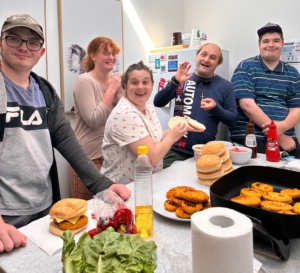
Five young adults stand at a kitchen bench where they are making burgers. There are chicken patties in a frypan, and buns and fresh salad ingredients on the bench. The people are laughing and happy.

If you, or someone you care for, has been part of a Centacare hub, it’s natural to feel concerned about what comes next – especially when it comes to friendships, routines, and ongoing support. The good news is, change doesn’t have to mean starting over. There are local options where you can continue to thrive, surrounded by the right people and opportunities. 

At Blue Tongue Adventure (BTA), we understand just how important daily structure, connection, and a sense of belonging really are. 

Our unique day program is built around exactly that. Blue Tongue Adventure, based in Brisbane and Toowoomba, specialises in creating fun, engaging, and skill-building programs that bring young adults together in a vibrant, welcoming space full of possibility. 

Our “crew” of 17 to 30-year-olds is spoiled for choice with a mix of creative, life skills, and social activities. No two days are ever the same. 

Here’s just a taste of what’s on offer: 

  • Cooking and café skills 
  • Art & Soul creative sessions including ceramics, painting, digital art, and theatre 
  • Health and wellness activities to build confidence and independence 
  • Pit Crew – basic car maintenance 
  • Garden maintenance and outdoor skills 
  • Woodwork workshops 
  • Industries – hands-on production of products such as body and room scents 
  • Community outings and adventures that build friendships and lasting memories 
  • School leavers employment support (SLES) 

Each program is thoughtfully designed to build capacity, boost confidence, and foster real community. Developed by young adults, for young adults, our activities are rooted in joy, capability, and genuine connection.  


A Bright Future Beyond Centacare

BTA

We know that finding the right environment – especially during times of change – can feel overwhelming. That’s why we make the transition to Blue Tongue Adventure as smooth and supportive as possible. 

If you’re considering a new option for yourself, your child, or someone you support, we’re here to answer your questions, listen to what matters most to you, and help you take the next step with confidence. 

  • Come for a tour and get a feel for our spaces, meet our team, and see our programs in action. 
  • Chat with us about how your current supports might translate into the BTA environment. 
  • Try BTA FREE For a Day, where you can try the activities, meet the crew, and see what makes BTA so special. 

Contact us to learn more via hello@bluetongueadventure.com.au or 1800 949 249 


For the Disability Support Workers Who Make It All Happen 

We know this change also affects the incredible staff at Centacare. For many, supporting others isn’t just a job – it’s a calling. If you’ve been part of that legacy and are now considering your next step, we’d love to talk to you. 

At Blue Tongue Adventure, we’re always on the lookout for kind, creative, and community-minded support workers who bring heart to their work. We offer a supportive and dynamic environment where your skills and energy truly matter. 

Contact our HR team on changeyourfuture@forcare.net.au or 1800 367 227 

Have you ever heard of Blue Tongue Pantry cafe, overlooking the water in Thorneside on Brisbane’s bayside, and thought, “hmm, that name sounds familiar…”? Yep, you’d be right – we started that, and we’re still closely linked to the Pantry to this day!

Our thanks to Blue Tongue Pantry for sharing their origin story online – which we’re reposting right here:

Blue Tongue Pantry’s Origins in Disability Support

If you’ve dined with us before, you know Blue Tongue Pantry as a great cafè by the bay in Thorneside, for hearty breakfasts, leisurely lunches, and of course excellent coffee! But you may not know how we started, where we got our name, and what continues to fuel our values and goals each day.

Our roots, in fact, lay in the disability support sector!

A Cafe with a Cause

Blue Tongue Pantry began as a social venture to support Blue Tongue Adventures disability support day programs for young adults. Back in 2018, the growing ‘Blue Tongue Crew’ needed a space where they could gather as a group, develop friendships, and enjoy programs that would support them to learn new skills: whether for day-to-day confidence and growth, or to explore potential employment opportunities.  Opening the Blue Tongue Pantry cafè was the perfect solution.

A woman working in the kitchen space of a cafè. She has made a pie that is in a tin ready to bake.

The cafè became a favourite dining spot with the local community, and a space to embrace inclusion and accessibility. With our chefs and waitstaff on hand to guide the Blue Tongue Crew, they enjoyed immersive cooking workshops and learning cafè skills. For some of our participants, these opportunities opened their eyes to employment pathways. They went on to do work experience with the cafè, then study hospitality or barista courses, and now have jobs of their own in the hospitality sector. We couldn’t be prouder!

A quiet area at the back of the cafè also became a cosy, familiar space for the Blue Tongue Crew and their support team to gather each day and engage in their growing range of capacity-building programs, all designed with their goals and interests in mind.

Growing and Thriving

As a few years passed, Blue Tongue Adventure expanded its range of programs, and the Blue Tongue Crew grew in numbers. It became clear they were outgrowing the cafè space. Plus, with plans and goals for many more exciting hands-on programs, they needed facilities to make their dreams a reality! A solution was found with another social venture: the Blue Tongue Collectables showroom and centre, just a few minutes away on Tingal Road in Wynnum.

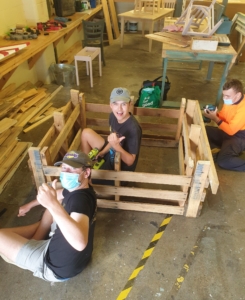
Three young men sit on the floor of a woodwork workshop, building a garden bed from wooden pallets. Two are smiling and giving the thumbs-up sign.

The new premises feature a wide range of spacious facilities including an art studio, a woodwork workshop, and room to store all the resources and supplies that help to make the hands-on disability support programs so successful. It also features a gallery space, where artworks and giftware items created by the Blue Tongue Crew in their programs are on display and available for sale.

Continued Connections

However, the move to a new centre hasn’t spelled the end of our connection with the Blue Tongue Crew! They’ve continued to join us at the Pantry for weekly cooking workshops, and this has been a main driver for the opening of our Blue Tongue Kitchen cooking school, right next door to us at Mooroondu Road Thorneside. With our expert pastry chef Allan at the helm, Blue Tongue Kitchen hosts the Blue Tongue Crew’s weekly workshops, as well as 10-week terms of capacity-building classes open to all NDIS participants. A select range of mainstream classes are also open to the general public on weekends.

So, both our cafè and the Blue Tongue Adventure crew have grown, but our core goals remain the same as they were back in 2018: to open opportunities for people with disabilities, to embrace our local community, and always to deliver uncompromised experiences.

Browse the range of Blue Tongue Industries giftware on the shelves at Blue Tongue Pantry on your next visit!

If you’re looking for unique and socially conscious gift ideas this festive season, the crew at Blue Tongue Adventure Wynnum has been working on a range of artisan creations, perfect for placing under your tree for someone special. 

A young man wearing an apron stands at a kitchen bench, tying labels onto jars of pickled preserves.

Nathan puts the finishing touches on delicious preserves at Blue Tongue Kitchen.

The Blue Tongue Crew has whipped up a range of delicious pickles, chutneys and relishes, as part of their capacity-building cooking workshops at the award-winning Blue Tongue Kitchen cooking school, under the expert guidance of Chef Allan. These preserves are ideal for festive season charcuterie platters, thoughtful gifts – or even to add some extra flavour to those post-Christmas leftovers! 

If you’re shopping for someone who deserves a luxurious treat, browse the Blue Tongue Industries range of home, bath and body products. The range includes candles, soaps, scrubs, body washes and lotions, all crafted and packaged by the Blue Tongue Crew. 

The Cooking and Industries workshops are just some of the activities on offer at Blue Tongue Adventure’s disability support day programs for young adults.  These workshops help to hone skills such as reading recipes and following procedures. Proceeds from the sale of the products are re-invested back into the programs.  

Check out the range on the shelves at Blue Tongue Pantry cafe, 100 Mooroondu Road Thorneside, opposite Beth Boyd Park. 

With Blue Tongue Adventure, the fun doesn’t stop when the programs finish at 3pm on weekdays!  Our Blue Tongue Crew also loves getting involved with Saturday social events, and travel for people with disabilities, through Tea-cup Events

It’s another service offered by our parent provider, Tea-cup Cottage, offering young adults the chance to explore your interests, hang out with others your own age, and take steps toward independence. With a wide range of exciting adventures on the calendar, you’ll be counting down the days until your next event or getaway! 

Supported Travel with NDIS funding 

Tea-cup Events specialises in short getaways – usually overnight trips on weekends, plus they coordinate a few 3 or 4 night trips each year as well.  It’s a budget-friendly way to utilise your NDIS STA (Short Term Accommodation) funding, which can cover supports, accommodation, meals, some activities and some transport (eg – road transport can be covered, but plane tickets are an out-of-pocket expense).  You share supports based on your care ratio, so your funding goes further. Plus, it’s a great chance to make new friends, try new experiences, and take those first steps toward independence by spending time away from the family home. 

Some of the most popular events include: 

  • Farmstays – animal experiences, campfires, cosy cabins and fresh mountain air 
  • City staycations – a night in the bright lights of the big city! 
  • Whitsundays Cruise – four nights sailing the Queensland coast, with one full shore day in Airlie Beach 
  • Sea World Resort – explore the theme park, and enjoy resort facilities including the fabulous heated pool 

Saturday Social events 

Enjoy everything the local community has to offer! Tea-cup Events also coordinates a variety of Saturday Social events. There’s no overnight accommodation at these events, but there are still new things to see, places to explore, and people to meet. Concerts, festivals, sporting matches, theatre shows and more! You can even suggest events you’d like to attend, and the Tea-cup Events team can make it happen for you! 

Aligned with Your Goals 

If you have NDIS goals to increase your independence, develop your social skills and explore your community, Tea-cup Events can support you on the way, helping you grow your confidence.  You don’t even have to be in the Blue Tongue Crew to join in! Visit the website here to see what’s coming up, or email events@tea-cupcottage.com.au to find out more!